BNA’s New Terminal II Should Integrate with the Music City LOOP for Smarter, Seamless Transit
Nashville International Airport’s newly announced Terminal II expansion will double the airport’s size — and the time to plan for integration with the Music City LOOP is now. Future parking lots and people movers like Tesla’s Robovan should be built with LOOP connectivity in mind. [Read more ➝]
By the LOOP Nashville Editorial Staff
10/28/20252 min read
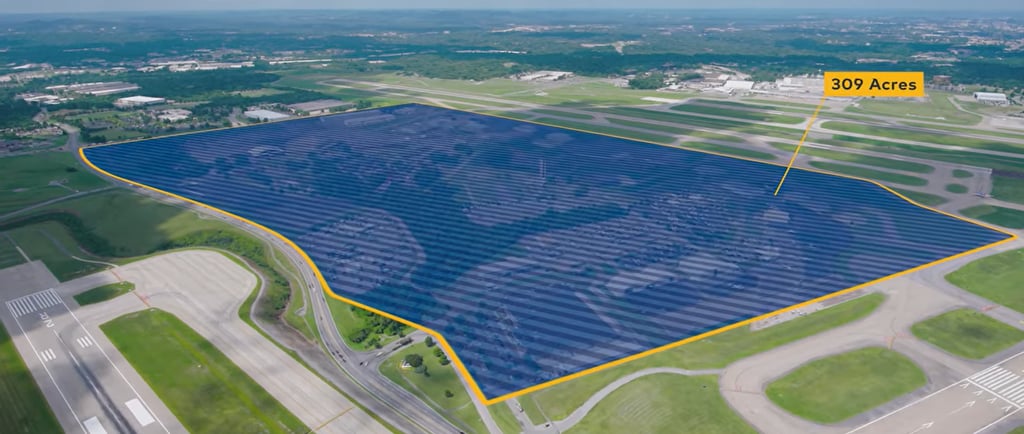
Source: WSMV: Nashville airport announces plans to double in size with new terminal
A Second Terminal for a Growing City
Nashville International Airport (BNA) has announced plans to build a second terminal on the south side of its property — a move that will ultimately double the airport’s capacity. Terminal II will cover more than 300 acres and include up to five new concourses, multiple parking garages, and expanded roadway access.
The announcement, delivered October 27 by BNA CEO Doug Kreulen and recording artist Trace Adkins, marks the start of a multi-decade expansion expected to transform how passengers move through one of the nation’s fastest-growing airports. While no official timeline has been released, the project falls within BNA’s “New Horizon” program — a long-term, multibillion-dollar modernization effort begun in 2022.
Built for 40 Million Passengers a Year
BNA’s growth trajectory has been dramatic: daily passenger volumes have more than doubled over the last decade, and forecasts now exceed 40 million travelers annually within ten years. The airport’s current expansion — including new concourses, roadways, and garages — sets the stage for Terminal II to take BNA from 70 to 140 gates.
The site south of Runway 13/31 was chosen for its accessibility and long-term growth potential. Officials emphasize sustainability features like geothermal cooling and recycled materials, reflecting BNA’s goal of maintaining world-class standards while managing cost and capacity.
Why the Music City LOOP Should Be Part of the Plan
As planning continues, airport leadership should actively pursue integration with the proposed Music City LOOP — The Boring Company’s underground high-speed transit system. Because Terminal II will be located across the airfield from the existing terminal complex, seamless passenger transfers will require new mobility solutions.
A LOOP corridor connecting the two terminals would offer a fast, weatherproof, and traffic-free route beneath the runways. Beyond terminal transfers, the LOOP should be designed to connect future parking garages and surface lots, many of which are being built under the New Horizon program. Early coordination would allow stations or portals to be incorporated into existing construction plans, rather than retrofitted years later.
Those conversations should begin now — before the first shovel hits the ground for Terminal II — to ensure that long-term infrastructure remains adaptable and that Nashville avoids costly redesigns down the road.
The Future Robovan: A Flexible People Mover
In addition to the LOOP, Tesla’s upcoming Robovan presents another opportunity for innovation on BNA’s property. The electric, autonomous multi-passenger van could serve as a subsurface-level people mover, shuttling travelers between parking areas, hotel zones, and terminal entrances.
With zero tailpipe emissions and smart routing capabilities, Robovans would complement underground LOOP routes, providing a clean, efficient “last mile” connection across the airport campus. Together, the two systems could give BNA an integrated, high-capacity ground network — one capable of handling the surging passenger loads anticipated through 2038 and beyond.
A Call for Forward Coordination
Terminal II’s success will depend on how well it connects — not just architecturally, but functionally — to the rest of Nashville’s evolving transportation system. By engaging early with The Boring Company and other mobility partners, airport planners can ensure that the next generation of infrastructure is built to connect, not compete.
If BNA embraces these technologies now, the Music City LOOP and Robovan fleets could turn what might otherwise be a logistical challenge into one of the nation’s most advanced multimodal travel hubs — reinforcing Nashville’s role as the South’s gateway to the world.
Disclaimer
LOOP Nashville aggregates publicly available news, commentary, and editorial content related to the Music City LOOP project. All source material is fully credited and attributed to its original publishers. All commentary and editorial opinions are solely those of the LOOP Nashville Editorial Staff. We are an independent site and are not affiliated with The Boring Company or the Music City LOOP project.
CONTACT
Follow
scoop@loopnashville.com
© 2025. All rights reserved.