
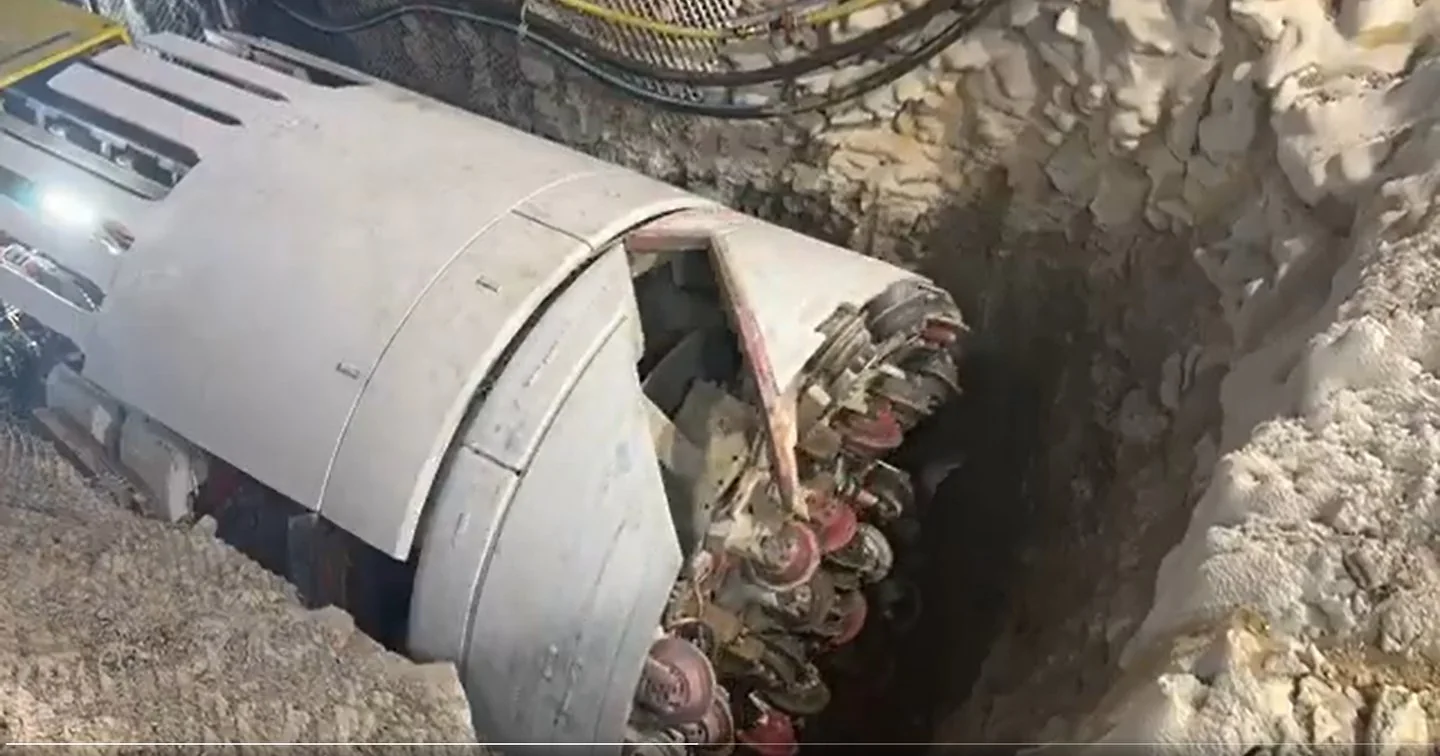
The First Machine’s Status
At the time of publication, The Boring Company said its first Nashville-bound Prufrock tunnel boring machine had been assembled and tested. Tunneling could not begin until the remaining permits and regulatory approvals were issued.
The company also said a second machine was being built at its Texas facility. That machine was expected to follow after assembly and testing.
How Prufrock Is Designed to Work
According to The Boring Company, Prufrock excavates rock while installing tunnel lining and is operated through a combination of onboard systems and remote monitoring. The company has described a longer-term goal of operating with no personnel in the tunnel during routine mining.
Those design claims concern worker exposure, construction speed and cost. Actual performance in Nashville would need to be evaluated after launch under local rock, groundwater and operating conditions.
Permits and Construction Questions
The immediate question was whether the project would obtain the permits needed for excavation, launch-site work and use of public rights-of-way. Equipment readiness alone did not authorize tunneling.
Other questions included how quickly the first machine could advance, how excavated material would be removed, how groundwater would be managed and when a second launch site could be prepared.
What to Watch
The next verifiable milestones were issuance of the remaining permits, the first machine’s launch and publication of measured construction progress. Those events—not equipment assembly by itself—would show how the Nashville project was advancing.
Update: The permitting milestone was reached
On Feb. 25, 2026, Tennessee announced that TDOT and the Federal Highway Administration had approved a lease application and enhanced grading permit for the company’s use of state-owned property and right-of-way. The Boring Company subsequently reported that the first Nashville Prufrock began tunneling in late February. That sequence resolved the central uncertainty described in this January report: the machine moved from tested equipment to an active construction operation.
The later start does not retroactively make the pre-permit work construction-authorized. The distinction remains important because equipment preparation, agency approval and physical excavation are separate milestones with different evidence.
What performance data would be useful
A launch confirms that tunneling has started, not how quickly or reliably the full network can be completed. Useful measures include feet excavated per day, planned versus unplanned downtime, segment installation rates, ground movement, water management and the time required to move and relaunch a machine.
Those figures are most meaningful when reported over sustained periods and with enough context to explain testing, maintenance and unusual ground conditions. Promotional videos can document activity, but they cannot replace consistent production and safety records.
Why the second machine matters
A multi-machine project creates opportunities to work on separate bores or corridors, but it also increases demands on power, material removal, staffing, maintenance and launch-site logistics. Subsequent company updates reported additional Prufrock machines in Nashville. The key question is whether adding machines produces a proportional increase in completed, usable tunnel rather than simply increasing equipment on site.
From permit to operating segment
The first excavation permit was one link in a longer chain. Tunnel alignment, additional launch sites, stations, airport access, roadway systems and passenger operations can each involve separate approvals and inspections. A permit that allows one phase to begin should not be described as blanket approval of every future route or facility.
Before passenger service, agencies and the operator will also need to validate fire-life-safety systems, evacuation procedures, communications, accessibility and vehicle operations. Those tests are distinct from the engineering achievement of boring through Nashville limestone.
This timeline is also a reminder that forecasts should be dated. The January article accurately described the machine as waiting for authorization; the February update records that the relevant state and federal actions were later announced. Preserving both points lets readers see how the project changed without rewriting the earlier uncertainty.
SOURCES
- Music City Loop project information and updates · The Boring Company
- State and federal approvals announced for Music City Loop right-of-way · Office of Tennessee Gov. Bill Lee