Project announced
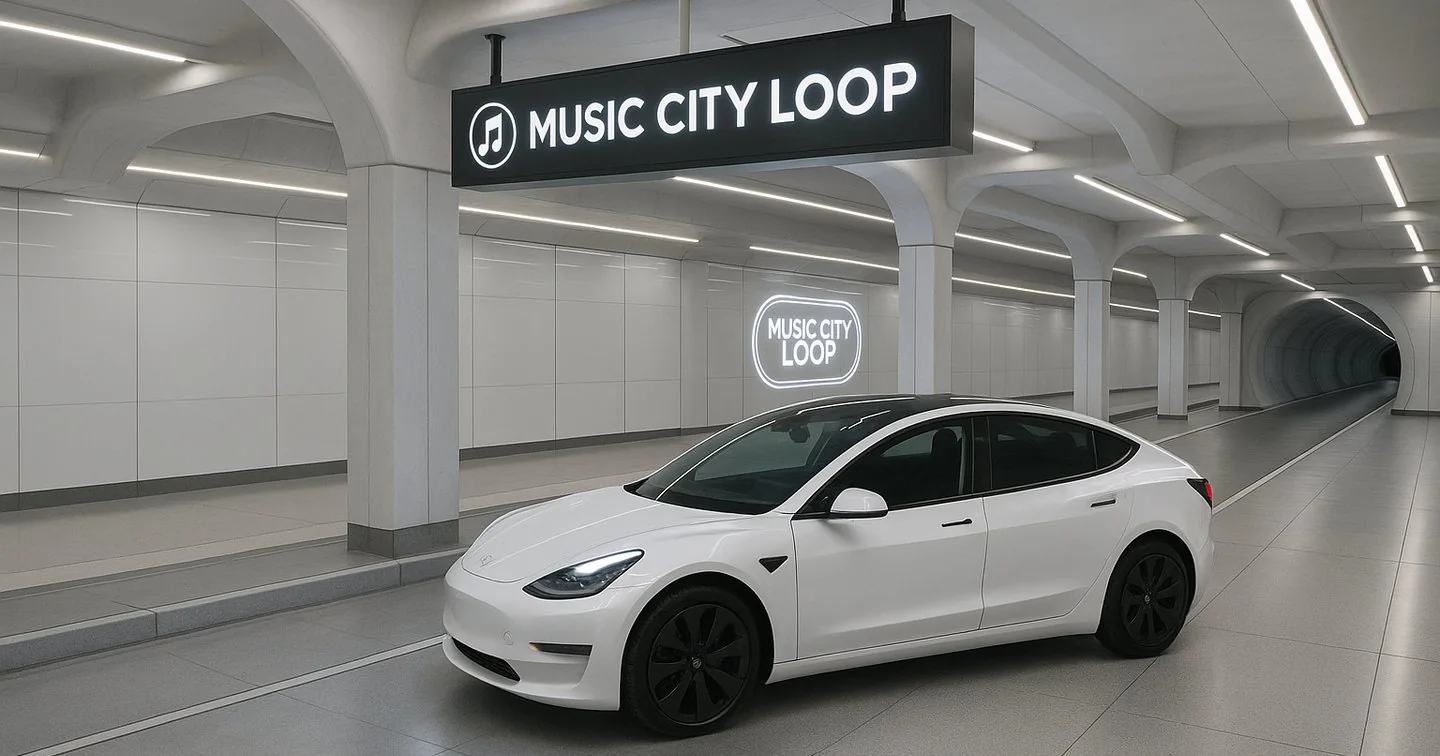
Gov. Bill Lee and The Boring Company announced the proposed Music City Loop on July 28, 2025. The initial concept called for tunnels connecting downtown Nashville with Nashville International Airport.
The governor’s office described the project as privately funded and said construction would use The Boring Company’s tunneling system. Those funding and performance descriptions came from the state and company at the announcement and remained subject to final agreements, permits and construction results.
What was proposed
The announcement described an approximately 10-mile initial connection, with electric vehicles operating underground between downtown and BNA. State materials projected an eight-minute trip, but that figure was a project estimate rather than an operating result.
Officials said the proposal would use state-controlled property and underground rights-of-way. Airport access, local interfaces, safety review and other approvals required separate work beyond the launch announcement.
What came next
The announcement began the public phase of a project that still needed route development, environmental review, property agreements and regulatory approvals. Later milestones should be evaluated against dated public documents rather than the launch-day projections.
LOOP Nashville tracks those milestones through government records, company updates and reporting from identifiable sources.
Update: State and federal approvals followed
The proposal moved beyond its launch-stage description on Feb. 25, 2026. The governor’s office announced that the Tennessee Department of Transportation and the Federal Highway Administration had approved a lease application and an enhanced grading permit for the company’s use of state-owned property and right-of-way. The state said those actions allowed construction to begin, while separate agreements and permits still governed airport property, additional launch sites and later portions of the network.
The Metropolitan Nashville Airport Authority also announced an agreement framework with The Boring Company in February 2026. The airport authority said it expected no capital investment from the airport or taxpayers and projected revenue from license and passenger pickup and drop-off fees over a potential 50-year term. Those projections are contractual estimates, not money already collected, and actual results will depend on a completed system and passenger use.
How to measure the original promises
The July 2025 announcement established a useful baseline: private construction financing, an airport-to-downtown connection and an estimated eight-minute trip. Each claim requires a different form of verification. Financing is best checked against executed agreements and any public obligations; travel time and capacity can be tested only through operations; and the final route should be compared with permits, leases and as-built plans.
Construction progress does not by itself confirm the eventual fare, service frequency, accessibility, station access or emergency procedures. Those operating details will determine whether the Loop functions as broadly useful transportation or a narrower point-to-point service. LOOP Nashville will continue separating completed milestones from company targets as those details become public.
Questions the announcement left open
The launch release did not establish final fares, hours, vehicle occupancy, station access rules or a complete construction sequence. It also did not publish a demand forecast showing how many airport travelers or downtown trips the initial segment was designed to serve. Those omissions were normal for an announcement, but they are essential inputs for judging the finished service.
The phrase “no cost to taxpayers” should be evaluated against the full set of agreements, not treated as a synonym for no public involvement. State and airport agencies still administer property, permits and oversight. The relevant question is whether contracts clearly assign construction, repair, inspection and long-term operating obligations without unplanned public expense.
Because this is the original announcement story, later developments are labeled as updates rather than blended into the launch-day account. That approach preserves what officials said in July 2025 while giving readers the approvals and airport framework that followed.
SOURCES
- Gov. Lee, The Boring Company unveil underground Music City Loop project · Office of Tennessee Gov. Bill Lee
- State and federal approvals announced for Music City Loop right-of-way · Office of Tennessee Gov. Bill Lee
- Airport authority announces agreement framework with The Boring Company · Metropolitan Nashville Airport Authority