Strategic Loop Expansions Could Transform Event Transportation Across Nashville
Proposed extensions of the Music City LOOP could link major venues like First Horizon Park, Geodis Park, and Nissan Stadium—moving thousands of people efficiently and easing Nashville’s chronic event-day traffic congestion. [Read more ➝]
By the LOOP Nashville Editorial Staff
10/31/20253 min read
Building Smarter Transit Around Nashville’s Biggest Event Venues
As Nashville continues to grow, so does its traffic problem—especially around large venues. A strategic expansion of the Music City LOOP, a proposed underground transit system from The Boring Company, could provide an efficient, high-capacity way to move thousands of people in and out of crowded areas during concerts, games, and special events.
The LOOP’s first announced routes center on the downtown core, but new concepts suggest several targeted extensions could dramatically expand its impact. These potential additions—connecting First Horizon Park, Geodis Park, and Nissan Stadium—would align with existing state-owned land and infrastructure to make construction more practical and cost-effective.
First Horizon Park: The Most Direct Expansion Opportunity
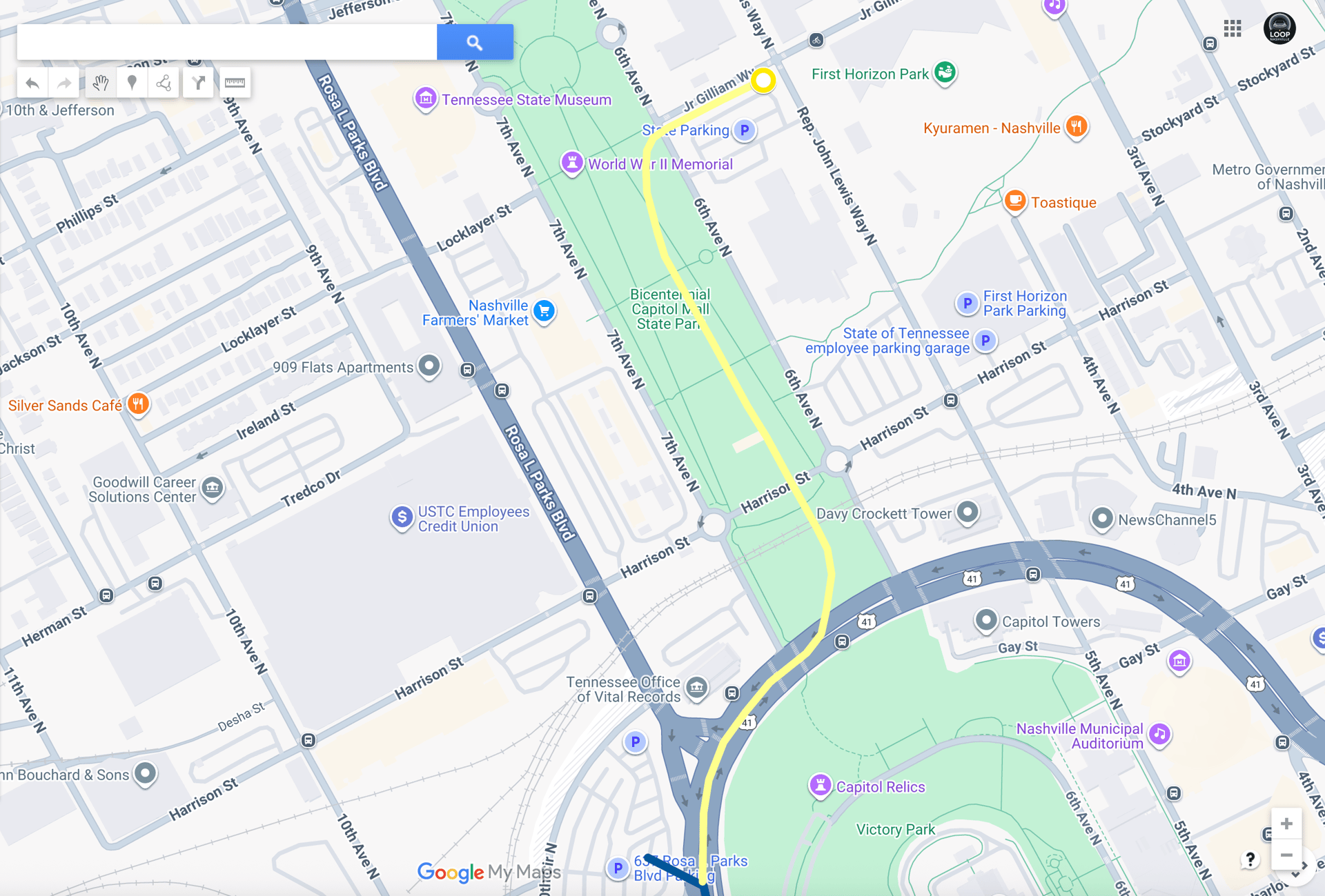
Among all potential expansions, a connection to First Horizon Park stands out as the most straightforward. Located directly across from multiple state-owned properties, the ballpark sits near where The Boring Company reportedly plans to stage tunnel boring machine operations.
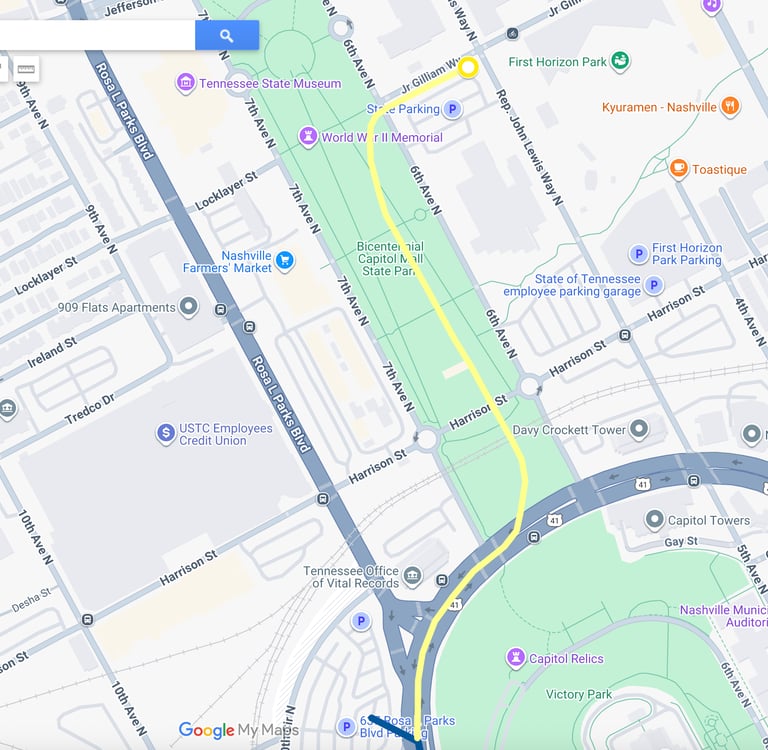
This alignment offers a unique opportunity: a direct line under James Robertson Parkway, continuing beneath Bicentennial Capitol Mall State Park, and terminating at a state-owned surface parking lot. That lot could easily be redeveloped into a high-capacity passenger station serving the park.
Such a route would not only help move spectators quickly to and from games, but also alleviate pressure on nearby roads that often bottleneck after large events. By using existing public property and minimizing surface disruption, it would represent one of the least complex additions to the LOOP’s network.
Extending South to Geodis Park and the Fairgrounds
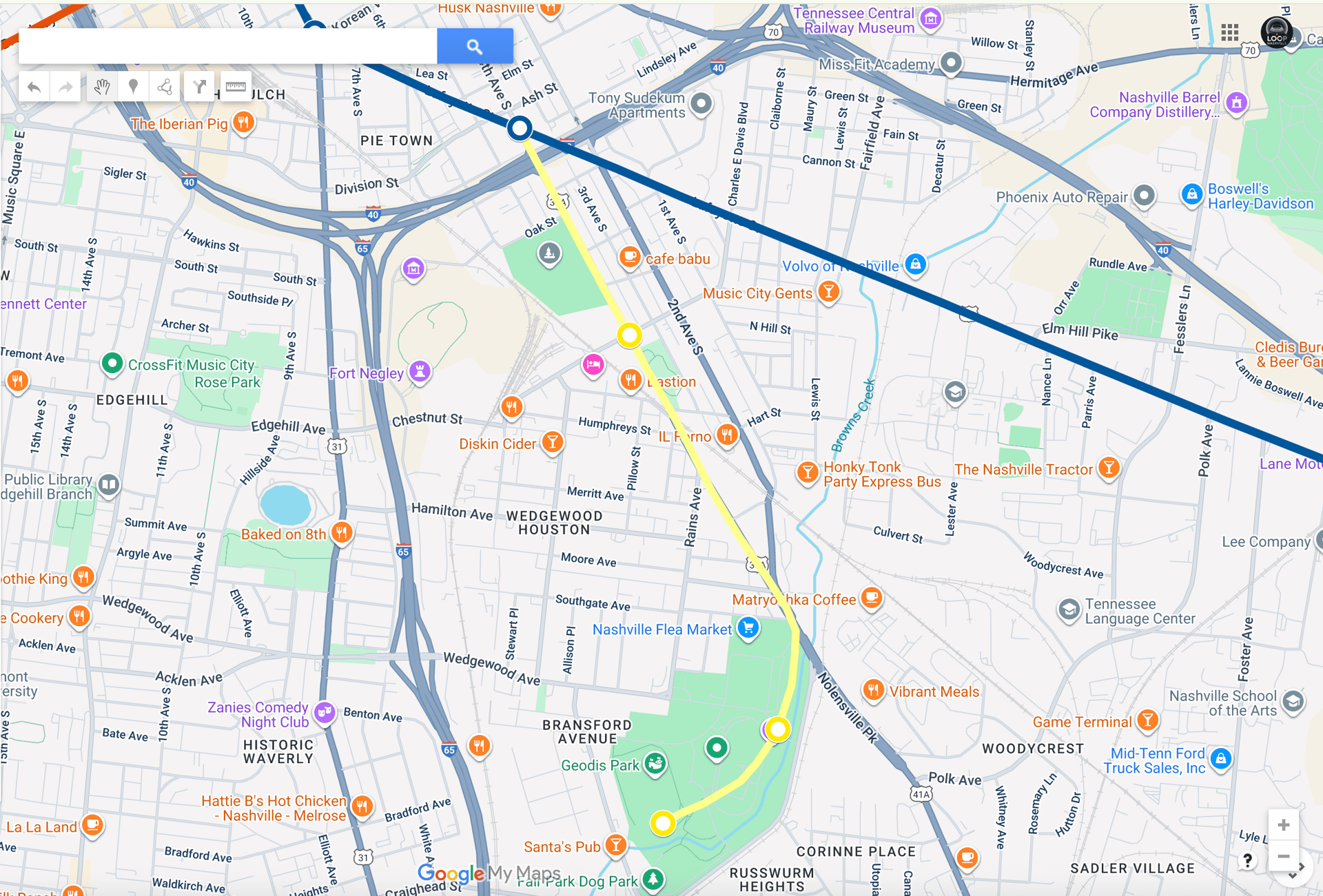
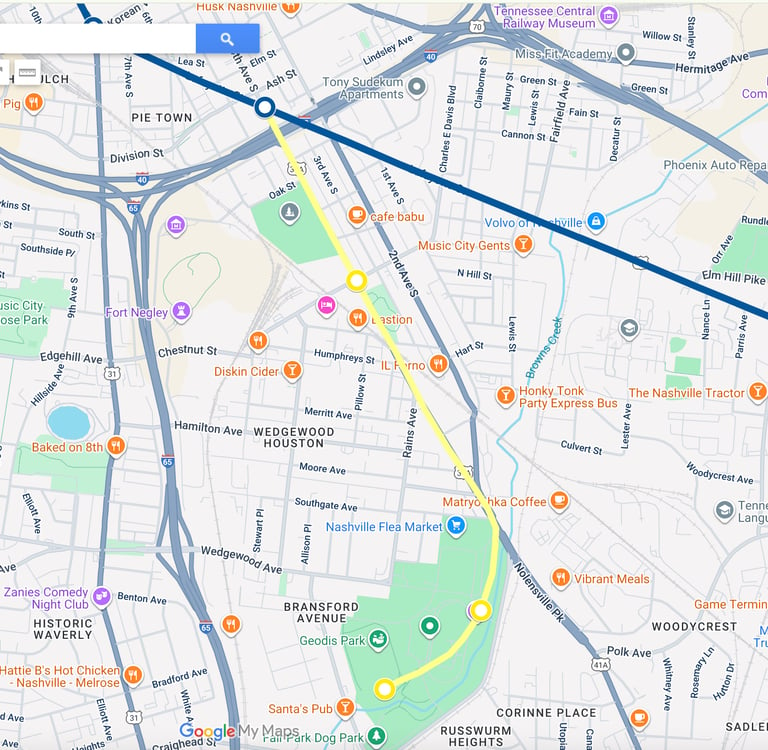
Another high-value extension could run south along 4th Avenue South, a state-owned road connecting downtown to Nashville Fairgrounds and Geodis Park. The soccer stadium has become one of Nashville’s busiest venues, drawing tens of thousands of fans on game days—and with them, major traffic headaches.
Poor planning during the stadium’s development has left nowhere near enough parking to accommodate demand, pushing visitors to park in surrounding neighborhoods or depend on rideshare services that are often overwhelmed. After matches, fans can wait extended periods of time just to find a car.
A LOOP connection along this route could dramatically reduce congestion and relieve the strain on surrounding neighborhoods. Riders could enter near Music City Center and reach Geodis Park in minutes, bypassing street-level gridlock entirely.
However, this expansion would require cooperation from the City of Nashville, which owns the fairgrounds and stadium property. Local easements would be necessary for tunneling beneath those areas. Hopefully, city officials will be able to look past their apparent “Elon derangement syndrome” and focus on the clear public benefits of the project. With thoughtful collaboration, this expansion could deliver safer streets, faster commutes, and a significant quality-of-life boost for Nashville residents.
Linking to Nissan Stadium: A River-Crossing Challenge
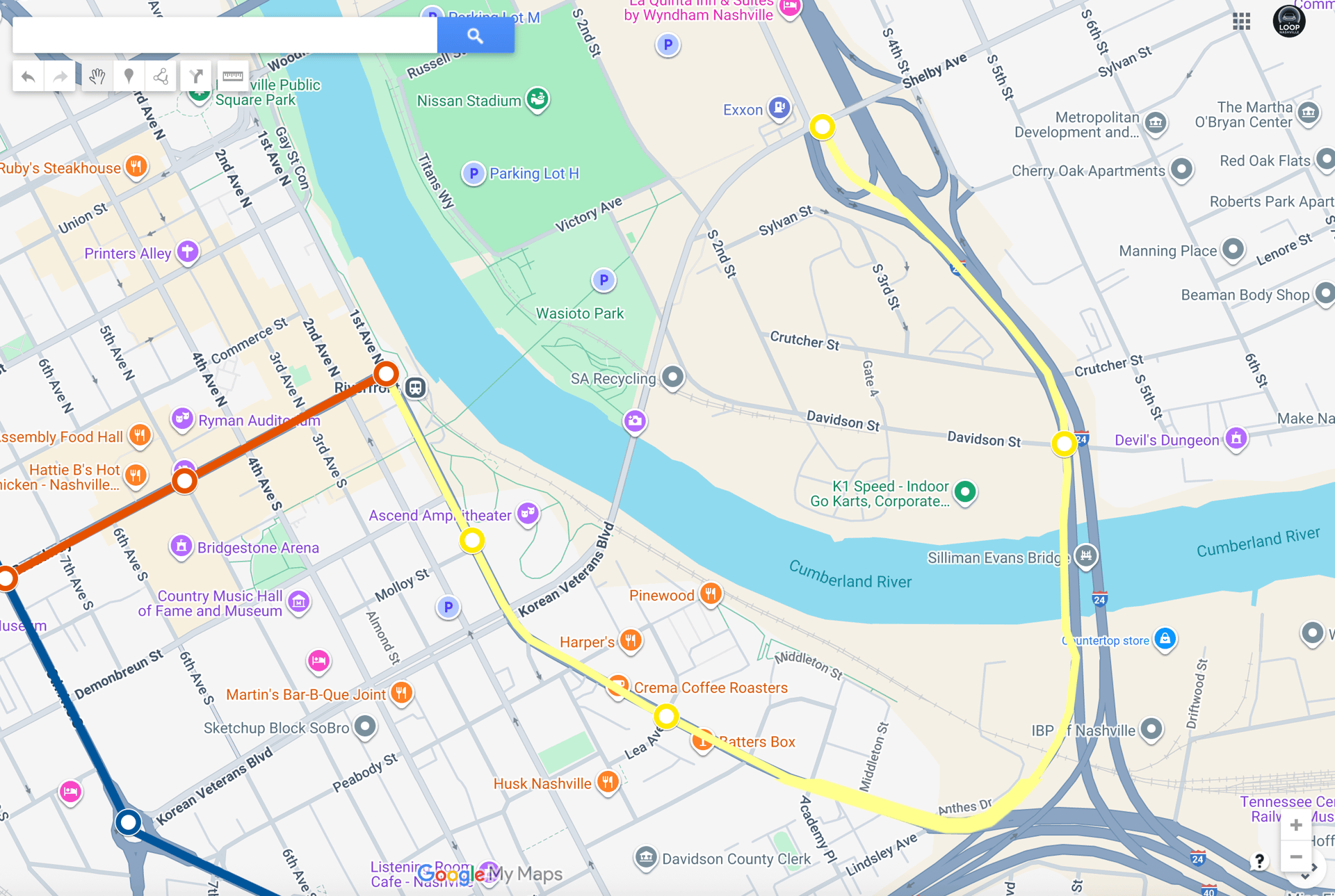
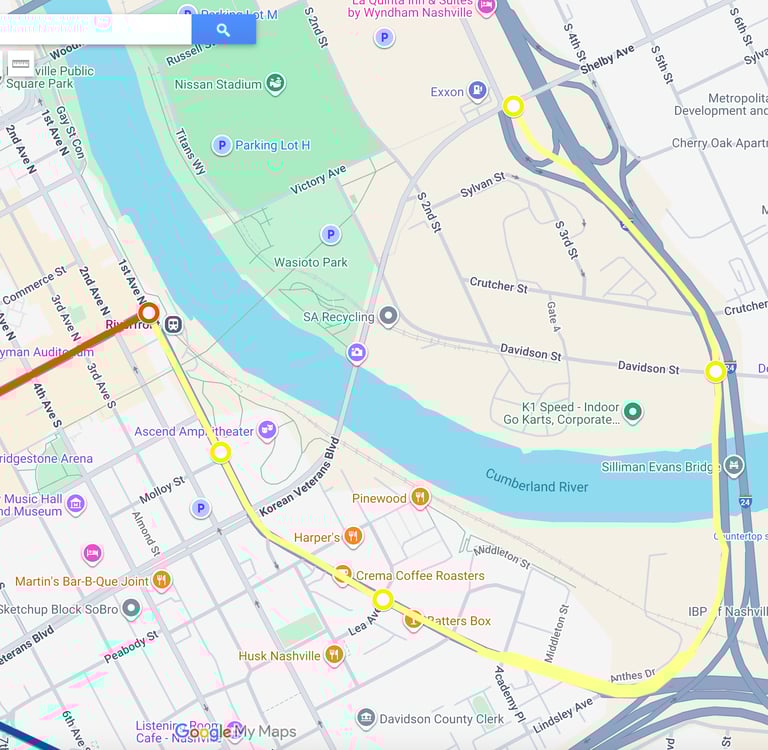
The most ambitious of the proposed expansions involves connecting the LOOP to Nissan Stadium, home of the Tennessee Titans. It is currently unknown whether tunneling beneath the Cumberland River would be technically feasible. However, an above-ground alternative could offer an innovative solution.
This concept envisions a subsurface connection extending from the LOOP’s Riverfront Station on Broadway, linking Ascend Amphitheater and Rutledge Hill, before transitioning onto a new, custom-designed bridge that would carry the line across the river. On the east bank, the route could then descend back underground to serve Nissan Stadium directly.
While the engineering would be complex, such a design could provide a visually striking and highly functional connection—integrating the downtown core with the stadium and creating faster, easier access for thousands of fans and visitors.
A Vision for Smarter Mobility
These expansion ideas reflect a growing consensus: Nashville’s future depends on better movement of people, not just cars. By strategically linking the LOOP to high-traffic venues, the city could significantly reduce congestion while offering a modern alternative to driving.
State ownership of key rights-of-way, including sections of Bicentennial Mall and 4th Avenue South, could simplify planning and lower costs. Meanwhile, leveraging partnerships with The Boring Company could accelerate implementation without placing undue strain on city resources.
While these routes remain conceptual, they illustrate how Nashville could transform its transportation infrastructure to meet the demands of a rapidly growing metropolitan area—one major venue at a time.
Disclaimer
LOOP Nashville aggregates publicly available news, commentary, and editorial content related to the Music City LOOP project. All source material is fully credited and attributed to its original publishers. All commentary and editorial opinions are solely those of the LOOP Nashville Editorial Staff. We are an independent site and are not affiliated with The Boring Company or the Music City LOOP project.
CONTACT
Follow
scoop@loopnashville.com
© 2025. All rights reserved.