Why Safety Matters: Rising Transit Crime and How the Music City LOOP Could Redefine Public Transportation
Violent crime on America’s public transit has surged over the past decade—undermining trust and pushing many riders away. The Music City LOOP offers a fundamentally safer model designed for the realities of the 21st century. [Read more ➝]
By the LOOP Nashville Editorial Staff
11/24/20254 min read
A Growing Challenge for Public Transit
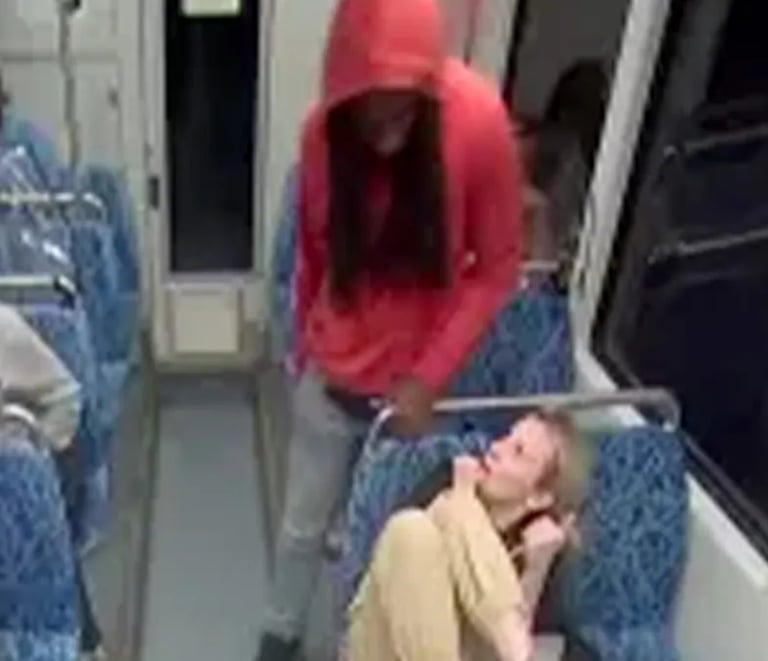
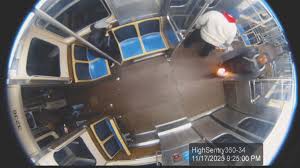
Public transit has long been considered a public good—connecting people with jobs, schools, and vital services. But across the United States, confidence in transit has been steadily eroding as violent crime reaches its highest levels in decades. Some of the most troubling incidents have underscored the risks in chilling ways: a young woman murdered without provocation on the Charlotte Light Rail, and another passenger set on fire aboard Chicago’s Blue Line. These tragic events are not representative of every transit trip—but they reveal a vulnerability that riders now have to weigh each time they step aboard.
The numbers tell the story. In 2014, national transit data reported just under 1,000 violent incidents. By 2019, that number had nearly doubled to 1,881—the highest ever recorded. When COVID-19 shut down major cities, transit ridership fell sharply, yet the rate of violent incidents per passenger actually rose. In many of the largest systems, this decline in safety aligned with reduced law enforcement presence and staffing—particularly during the height of pressure campaigns associated with the “Defund the Police” movement. Many legacy systems found themselves trying to maintain crowd-based transit models while navigating reduced enforcement capability, leaving passengers more exposed to risk.
Where Transit Crime Happens—and Why
Transit crime does not strike all systems equally. It clusters most heavily in cities with large, open-access transit networks—New York, Chicago, Philadelphia, Los Angeles, San Francisco, and Washington, D.C. Their buses, subways, and light rail stations operate with multiple public entry points, long dwell times, and unpredictable passenger interactions. When thousands of people share crowded platforms each day, safety becomes difficult to manage and nearly impossible to guarantee.
The challenge is as much structural as it is cultural. Most major-city transit systems were built for an earlier era—one that assumed people would behave rationally and that government would remove violent individuals from participation in society, rather than designing safety into the system itself. When law enforcement staffing is uncertain or stretched thin, legacy systems struggle even further, relying on cameras, extra patrols, or public outreach efforts to catch problems after they begin.
Modes of Transit: Different Risks, Same Concerns
From 2014 to 2021, buses and heavy rail systems each recorded more than 4,000 violent incidents nationwide. Light rail saw fewer total incidents but the highest rate of violent crime per passenger-mile, especially in Minneapolis, Houston, and San Jose. The common thread is crowded shared space and unpredictable wait times.
Nashville’s transit network is still primarily bus-based—and Nashvillians have historically avoided riding buses for precisely this reason. The perception that buses are unsafe has led residents to simply stay away. Whether the number of incidents here is lower than in major cities or not, the public has already rendered its verdict: Nashvillians will not use a system that feels outdated, crowded, or unsafe. This is not just a transportation problem—it is a trust problem.
Why Legacy Transit Falls Short
Traditional transit relies on long waits at shared stations, crowd movement, and fixed schedules. These structures expose riders to unnecessary risks before a trip even begins. Riders are asked to stand in public areas, sometimes late at night, in settings that are difficult to secure and difficult to monitor. Once onboard, they are enclosed with strangers for long periods in spaces that were never designed to prevent conflict—only to respond to it.
Nashville should not repeat this design philosophy. The city faces a deeply 21st-century problem—and it should not reach for 19th and 20th-century solutions. Instead of copying the models currently struggling in other cities, Nashville has the opportunity to solve the safety equation differently: by changing the nature of how a rider experiences transit.
The Music City LOOP: A Safer Transit Model for Our Time
The Music City LOOP transforms the way transit works by eliminating the core vulnerability of traditional systems: forced proximity to strangers. LOOP vehicles carry individuals or small groups who choose to travel together. Riders do not wait on crowded platforms and do not ride in large enclosed vehicles with people they do not know.
This model has already proven its effectiveness. In Las Vegas, the LOOP has moved passengers at peak volume while maintaining throughput speed rivaling many subways and light rail systems—all without crowding riders into shared spaces. Travel is direct and point-to-point. Stations are simple, controlled, and designed for rapid boarding. Riders are not forced to stop at intermediate stations or wait in unpredictable public areas. Instead, they move quickly from origin to destination with minimal exposure to risk.
As the technology matures, fully autonomous vehicles will only improve safety further. With no bus driver to confront and no crowded vehicle to patrol, risk becomes easier to monitor and easier to manage. Smaller vehicles and direct routing mean fewer security personnel are needed—and the ones who are can respond more rapidly and effectively. The LOOP is not an attempt to fix a failing system. It creates a new one, built around choice, control, speed, and safety.
A Civic Opportunity for Nashville
Public transit must earn public trust. If riders feel unsafe, they simply stop riding—and costs to the taxpayer increase. This pattern has played out across the country, burdening cities with legacy systems that require billions in subsidies but do not earn the public’s confidence. Nashville does not need to follow that path.
The Music City LOOP presents a different option—and does so at absolutely zero cost to the taxpayer. Its public-private structure means safety does not come with a funding request. It arrives with a promise: modern transit that moves quickly, protects riders, and aligns with how people actually want to travel. Nashville does not have to inherit the safety problems plaguing cities elsewhere. It can set a new standard for urban mobility—one that honors the public trust while protecting the public’s safety.
In this moment, Nashville has a chance to lead—not only in infrastructure, but in confidence. A safe transit system is not just a transportation improvement. It is an improvement in how a city lives.
Disclaimer
LOOP Nashville aggregates publicly available news, commentary, and editorial content related to the Music City LOOP project. All source material is fully credited and attributed to its original publishers. All commentary and editorial opinions are solely those of the LOOP Nashville Editorial Staff. We are an independent site and are not affiliated with The Boring Company or the Music City LOOP project.
CONTACT
Follow
scoop@loopnashville.com
© 2025. All rights reserved.