
Tunneling Creates a Second Problem: Moving the Rock
A tunnel boring machine does not simply make rock disappear. Every foot Prufrock advances through Nashville limestone produces excavated material that has to be moved away from the cutterhead, carried back through the growing tunnel and lifted to the surface.
If that process cannot keep pace with excavation, the machine cannot keep advancing. That makes the Music City Loop’s rock-removal system one of the most important pieces of equipment at the construction site.
The Journey Starts at the Cutterhead
At the front of Prufrock, the rotating cutterhead breaks the rock into manageable pieces. That material - often called spoil or muck in tunneling - is collected and transferred onto conveyors behind the machine.
From there, it begins a long trip in the opposite direction of the TBM: back through the tunnel toward the Lot 16 launch site.
The Conveyor Has to Grow With the Tunnel
The unusual challenge is that the distance between the machine and the surface is constantly changing. As Prufrock advances, the conveyor system has to be extended so rock can continue moving continuously out of the tunnel.
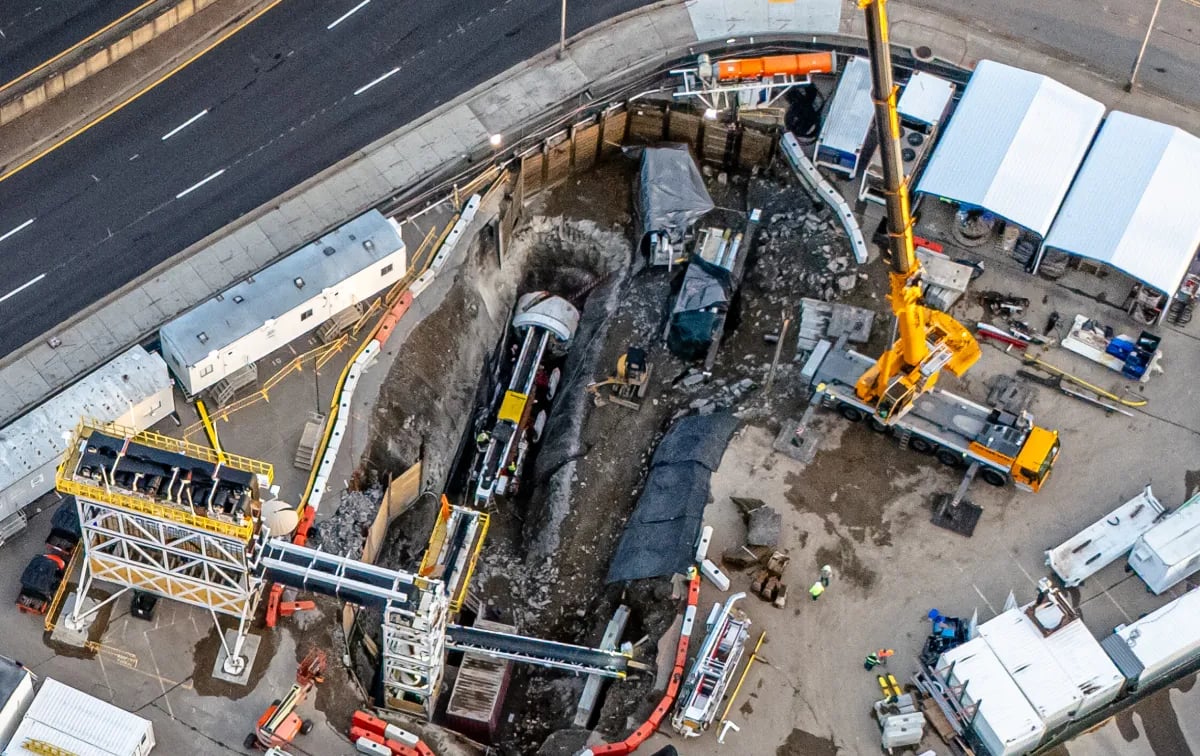
TBC has highlighted a vertical cassette system used at the launch site to manage the conveyor belt as the tunnel length increases. The belt can be fed into the system as more distance is required, allowing the conveyor to grow without repeatedly shutting down the tunneling operation.
Why Continuous Removal Matters
Tunnel speed is often discussed as if it depends only on how fast the cutterhead can break rock. In practice, the whole construction chain has to move together. Cutting, spoil removal, tunnel support, power and maintenance all affect the rate at which the machine can advance.
A highly productive cutterhead is of little value if broken rock backs up behind it. By the same token, a reliable conveyor system helps turn short bursts of excavation into steady production.
Two Machines Mean Two Rock Streams
The importance of material handling will grow as Nashville adds machines. Prufrock-MB2 is being prepared to launch, and TBC has already begun building MB3. By August, the company would report a second vertical cassette online to support MB2.
For most people above ground, the tunnels remain largely invisible. But beneath Lot 16, one of the clearest signs of construction progress is remarkably simple: a continuous stream of Nashville limestone moving in the opposite direction from the machines creating the city’s new underground route.
SOURCES
- Music City Loop project information and updates · The Boring Company