In September 1971, a transportation consulting firm prepared a report for Nashville titled A Long Range View of Transit in Nashville.
Among the concepts examined were rapid rail, monorail, and personal rapid transit systems that would carry small groups of passengers along dedicated guideways, separated from conventional automobile traffic.
That was 55 years ago.
Nashville has changed considerably since then. Its skyline has been transformed, its population has grown, and its economy has become the envy of cities across the country. Tennessee's longstanding commitment to fiscal conservatism, low taxes, and responsible stewardship of public resources has helped create the conditions for that extraordinary growth. Yet the question of how to move people efficiently throughout the region has remained remarkably persistent.
This Thanksgiving, for the first time in a long time, Nashville can look beneath its streets and see something more than another transportation study.
It can see progress.
At LOOP Nashville, we believe there is much to be thankful for this year.
We are thankful for private enterprise.
The U.S. Department of Transportation has described the Music City Loop as a $200 million project, and The Boring Company estimates its total investment will amount to several hundred million dollars.
That is private capital being put to work solving a public transportation challenge.
The Boring Company is purchasing property, manufacturing equipment, hiring employees, excavating tunnels, and developing stations throughout Nashville. It intends to finance, construct, operate, and maintain the transportation system without taxpayer funding for its construction or operation.
The company is assuming the financial risk that traditionally accompanies major transportation infrastructure projects. Its success will ultimately depend on whether it can provide a service that people find useful, convenient, reliable, and affordable.
That is capitalism at work. A company has identified a problem, developed a potential solution, and committed its own resources to bringing that solution to market.
If it succeeds, both the company and the people of Middle Tennessee stand to benefit.
We are thankful for a state government willing to think differently.
For decades, discussions about major transportation improvements in Nashville have inevitably returned to the same question: How will taxpayers pay for them?
In 2018, Nashville taxpayers rejected a transportation proposal with an estimated capital cost of $5.4 billion that included light rail and a tunnel beneath downtown.
In 2024, voters approved a separate transportation improvement program focused on expanded bus service, sidewalks, traffic signals, and roadway safety.
The Music City Loop introduces another approach.
Governor Bill Lee and his administration recognized that the private sector had developed technology capable of addressing some of the transportation challenges Nashville had been studying for generations.
Rather than assuming government had to build and operate the solution itself, Tennessee pursued a partnership with a company willing to make that investment.
It is an example of government recognizing that its role is not always to provide a service directly. Sometimes, its most valuable contribution is creating the conditions under which others can provide it.
We are thankful for the creative use of public assets.
The State of Tennessee already owned something essential to the development of a transportation network connecting many of Nashville's most important destinations: its highway rights-of-way.
What it had not previously done was put the space beneath those roadways to work in quite this way.
By making state-owned underground corridors available through a lease agreement, Tennessee created an opportunity to leverage existing public assets to facilitate hundreds of millions of dollars in private investment.
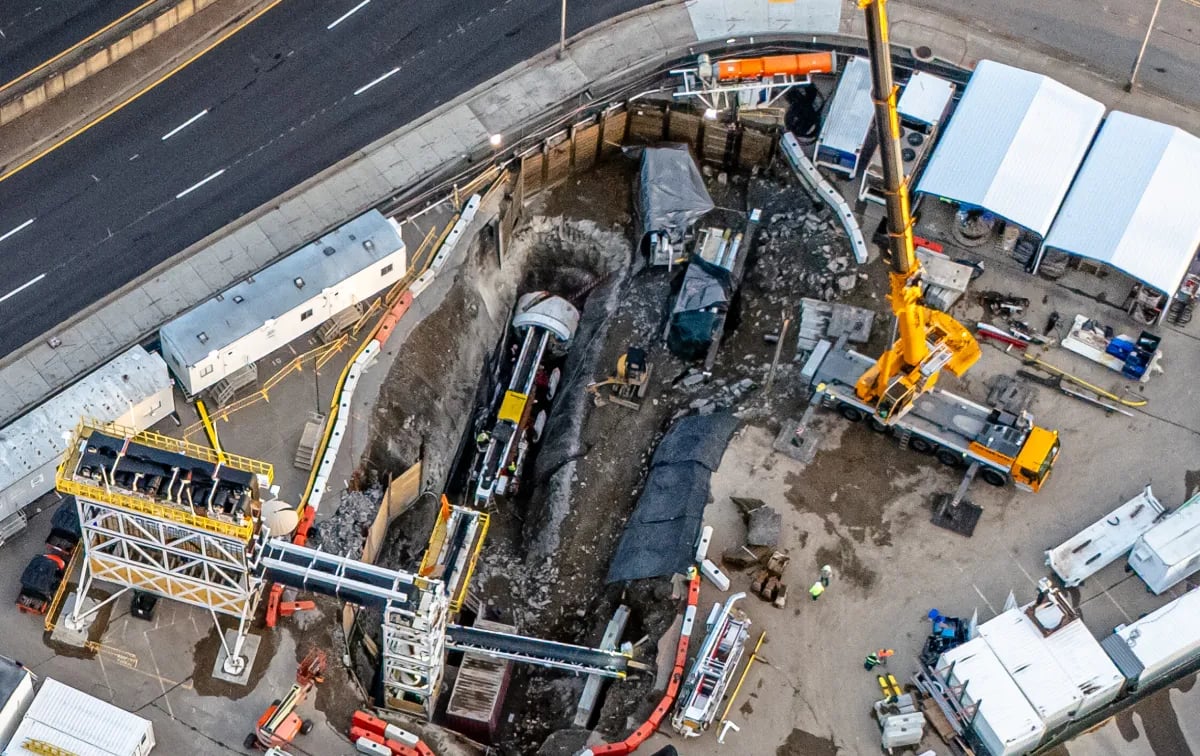
The state also made Lot 16, a parking lot near the Tennessee State Capitol, available for the initial tunneling operations. That property has since become the launch site for Nashville's first two tunnel boring machines.
These decisions illustrate what effective stewardship of public property can accomplish.
The public can retain ownership of its assets while finding new and productive ways to use them. In this instance, space beneath existing roadways could become an entirely new transportation network without requiring the state to build it.
We are thankful for a legislature willing to innovate.
Technology does not always advance at the same pace as government.
Too often, emerging industries encounter regulatory structures designed decades before the technologies they seek to deploy were even conceived.
Earlier this year, the Tennessee General Assembly enacted the Subterranean Transportation Infrastructure Coordination Act, establishing a pioneering statewide framework for the development of underground transportation systems.
The law recognizes the unique nature of subterranean infrastructure, establishes a coordinated regulatory process, and creates mechanisms for resolving disputes and navigating the complexities of building transportation networks across jurisdictional boundaries.
Importantly, it provides a framework that extends beyond any one company or transportation project.
As new technologies emerge and private companies develop new ways to move people and goods, Tennessee now has a statutory foundation upon which those innovations can be deployed.
Streamlining regulation does not mean abandoning safety standards or engineering requirements. It means establishing clear responsibilities, predictable procedures, and a process through which responsible companies can make investments with greater certainty.
Tennessee's experience could ultimately serve as a model for other states confronting similar transportation challenges.
We are thankful for public servants who understand the value of getting things done.
Behind every tunnel boring machine operating beneath Nashville are months of engineering reviews, technical evaluations, permit applications, and coordination among public agencies.
In February, the Tennessee Department of Transportation and the Federal Highway Administration approved The Boring Company's lease and permitting arrangements for construction beneath state roadways.
The U.S. Department of Transportation subsequently reported that federal coordination reduced the project's approval timeline by 83%.
The engineers, technical specialists, and public servants who made those approvals possible deserve recognition.
So do the officials at Nashville International Airport, the Music City Center, and other institutions working to connect their facilities to the emerging transportation network.
Major infrastructure projects require cooperation among people and organizations with different responsibilities. Nashville is fortunate to have many people willing to work toward a common objective.
We are thankful for American ingenuity.
The tunnel boring machines operating beneath Nashville were designed and manufactured in the United States.
The Boring Company is challenging long-held assumptions about how tunnels are built, how much underground infrastructure should cost, and how quickly transportation networks can expand.
Its engineers are applying lessons learned during construction in Nashville to the development of subsequent machines. Improvements identified in the field can be incorporated into equipment already being manufactured.
That culture of continuous improvement is one of the great strengths of American entrepreneurship.
There is something particularly fitting about Nashville, a city built in large part by creative people willing to challenge convention, becoming a proving ground for a new generation of American transportation technology.
We are thankful for businesses willing to invest alongside the project.
Hotels, residential developments, commercial property owners, and other businesses are exploring opportunities to connect directly to the Music City Loop.
In October, The Boring Company reported that more than 40 stations were in various stages of planning and design.
The potential for businesses to participate directly in the development of a transportation network is one of the most compelling features of the Loop model.
A hotel can benefit from a direct connection to the airport. An office building can become more attractive to employers and employees. A residential development can offer its occupants convenient access to destinations throughout the city.
Each new station has the potential to make the entire network more useful.
At Nashville International Airport, the airport authority's financial projections suggest the Loop could generate approximately $343 million in licensing and operating fees over a possible 50-year agreement.
Imagine the possibilities if transportation infrastructure increasingly becomes something that attracts private investment and generates revenue for public institutions, rather than something that depends exclusively on public expenditures.
We are thankful for the people building it.
While much of the public attention surrounding the Music City Loop focuses on elected officials, executives, and technology, the project is being built by people.
Engineers, electricians, mechanics, equipment operators, construction workers, and countless other professionals are turning engineering drawings into physical infrastructure beneath our city.
They are solving problems, developing expertise, and helping establish Nashville as a center for an emerging American industry.
As many of us gather around Thanksgiving tables today, we should also recognize the men and women whose work will help future generations of Nashvillians spend less time traveling and more time with the people they love.
Above all, we are thankful for the possibilities.
The Music City Loop is still being built. Its first passengers have yet to experience what the system can offer, and much work remains.
But consider where Nashville could be a decade from now.
An expanding underground transportation network could connect neighborhoods, employment centers, entertainment districts, universities, hotels, the airport, and eventually communities beyond Davidson County.
It could complement the investments already being made in Nashville's bus system and existing commuter rail service. It could make the region more accessible to workers, more attractive to businesses, and more convenient for residents and visitors alike.
And because tunnels can be constructed at different depths, the transportation network Nashville begins building today need not be limited by the same geographic constraints as its existing roadways.
Fifty-five years ago, Nashville was studying the possibilities of advanced transportation technology.
Today, American entrepreneurs, Tennessee public servants, private investors, and hardworking men and women are helping turn some of those possibilities into reality.
That is something worth being thankful for.
From all of us at LOOP Nashville, Happy Thanksgiving.
SOURCES
- A Long Range View of Transit in Nashville (September 1971) · Transportation Research Board, TRID
- Transportation Secretary tours Nashville's Music City Loop · U.S. Department of Transportation
- Music City Loop project · The Boring Company
- Governor Lee announces approval of lease and permit for use of state right-of-way · State of Tennessee
- Subterranean Transportation Infrastructure Coordination Act (SB 2205, Public Chapter 854) · Tennessee General Assembly
- Music City Loop October 2026 update · The Boring Company
- Choose How You Move · Metropolitan Government of Nashville and Davidson County
- 2018 Nashville transit referendum · Ballotpedia